

























Ventilation needs in an enclosed restroom
Ventilation Needs for Windowless Bathrooms in Italy
Standard Regulations
A windowless bathroom lacks natural air circulation, thus, Italian legislation mandates the installation of a mechanical ventilation system to promote air quality and prevent mold and excess moisture. The essential guidelines for planning and setting up such spaces are outlined in the Decree issued by the Italian Ministry of Health on July 5, 1975**, alongside regional or municipal building codes, which can vary based on location.
Is it Permissible to Have a Windowless Bathroom without Ventilation?
In Italy, having a windowless bathroom without a mechanical ventilation system breaches health regulations. The absence of windows obstructs natural air circulation, underscoring the necessity of mechanical ventilation to maintain a healthy indoor environment.
Regulatory Standards for Bathrooms
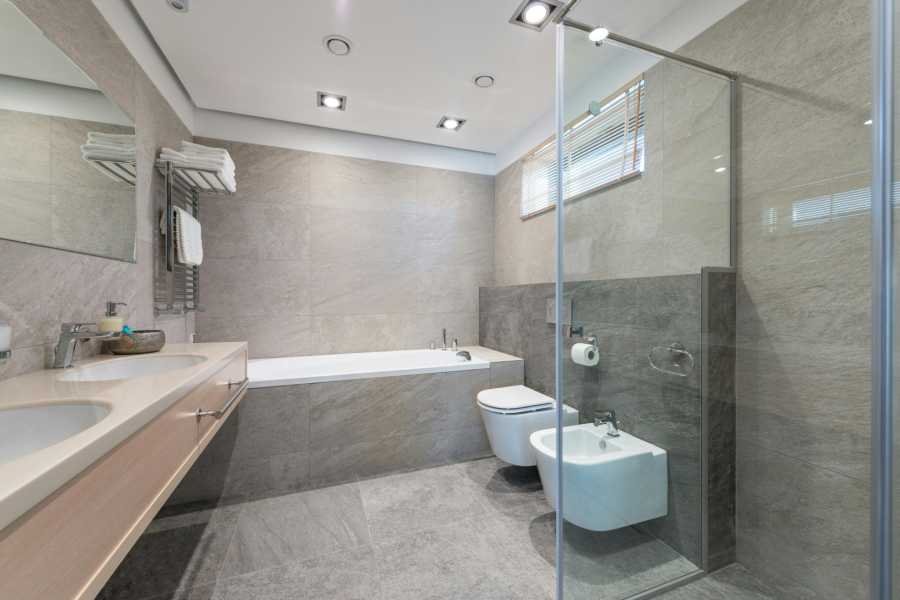
As per the Ministry of Health Decree dated July 5, 1975, a bathroom must feature the following key elements: - a sink; - a bathtub or shower; - a toilet; - a bidet.
National regulations do not specify the bathroom size, yet local building codes may stipulate minimum dimensions. For instance, in Milan, a ruling since 2014 necessitates a bathroom to be spacious enough to accommodate all the mentioned elements, with one wall reaching a minimum of **1.2 meters** in height. Other areas may enforce specific size requirements.
Ventilation System Requirements (VMS) in an Enclosed Bathroom
For effective air circulation in an enclosed bathroom, a ventilation system (VMS) must be installed meeting the following criteria:
1. Calculating Air Exchange Volume The ventilation system's capacity is determined by the room volume and usage frequency. According to standard **UNI EN 16798-1**, the system should provide: - 6 air changes per hour with continuous exhaust; - 12 air changes per hour with forced ventilation controlled automatically.
The calculation factors in the room's volume (length × width × height) and the required air renewal rate, along with ensuring fresh air intake through designated openings or ducts.
2. Selecting System Components - Fan Type: Options include centrifugal fans or decentralized VMC systems. - Duct Size: Proper sizing minimizes pressure loss and guarantees uniform airflow. - Ventilation Placement: Position exhaust and supply grilles to facilitate even air circulation.
3. Noise Reduction The ventilation system should operate quietly. Soundproofed ducts, sound attenuators, and anti-vibration elements are employed to enhance occupant comfort and minimize disturbance caused by fan operation.
Varieties of Ventilation Systems for Enclosed Bathrooms
1. Mechanically Controlled Ventilation (MCV) MCV systems effectively eliminate stale and polluted air, replacing it with fresh, filtered outdoor air. Two types of VMC systems exist: - Single-flow VMC: Extracts stale air and introduces fresh air through specific openings in other rooms. While simple and cost-effective, it may lead to heat loss due to temperature variations. - Dual-flow VMC: Removes stale air and supplies preheated or cooled fresh air via a heat exchanger. This sophisticated system offers high comfort and energy efficiency.
2. Exhaust Fans Exhaust fans provide a straightforward solution for expelling moist air and come in various forms: - Wall-mounted: Installed on an external wall to release air outside. - Ceiling-mounted: Positioned on the ceiling and connected to ducts leading outdoors. - Timer-controlled: Activated along with bathroom lighting. - Equipped with humidity sensors: Automatically triggered when humidity surpasses set levels.
Where Should the Exhaust Fan be Placed?
For optimal functioning, position the exhaust fan in an enclosed bathroom: - Adjacent to moisture sources (bath or shower) for prompt steam removal and prevention of condensation and mold. - On the ceiling or high on the wall to capitalize on rising warm, moist air. - Connected to an external air duct for air expulsion outside the residence, preventing stagnation in other areas or cavities.
When selecting a fan, ensure its power matches the bathroom volume and necessary air exchange rate. Installation should adhere to safety standards, including proper distance from water sources and mounting height.
Conclusion
Italian regulations mandate the presence of a mechanical ventilation system in enclosed bathrooms to comply with health and construction codes, ensuring a healthy indoor environment. When designing the ventilation system, consider room volume, equipment type and capacity, sound insulation, and component placement for an effective setup.