
























The most desirable regions of Italy
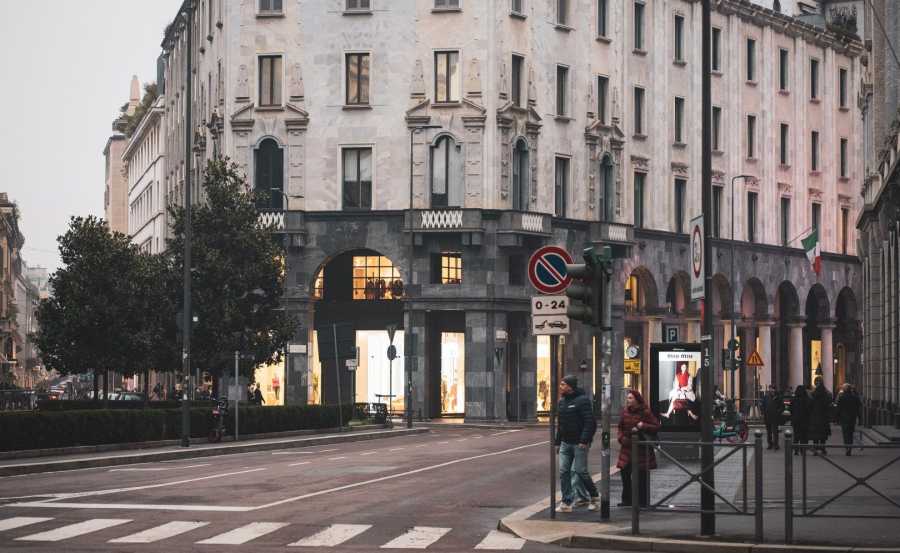
The prime districts in Italy have emerged as the frontrunners in terms of challenges in selling a property
This is shown by data from Homepanda Horizon, the initial analytical center assessing the actual liquidity of the Italian real estate market. The roster of locations with the poorest sales performance comprised Navigli in Milan, the Historic Center of Rome, Posillipo in Naples, and San Salvario in Turin.
While previously a belief existed that a prestigious location automatically ensured a swift sale, current statistics completely debunk this notion. In numerous instances, the reality is quite the opposite. The Homepanda Horizon research center, established by the eponymous real estate agency, conducted extensive monitoring of 243,266 property listings for home sales over 12 months across Milan, Rome, Naples, and Turin. The final outcomes challenge the deeply ingrained stereotypes of the industry.
Homepanda Liquidity Index
This paradox was unveiled using two exclusive analytical instruments:
- Homepanda Liquidity Index (IVH): assesses the actual likelihood of a successful property sale on a scale from 0 to 10.
- Thermometer discounts: tracks the frequency and magnitude of adjustments to the initial property price during its online presence.
Well-known neighborhoods where real estate faces challenges
Navigli in Milan
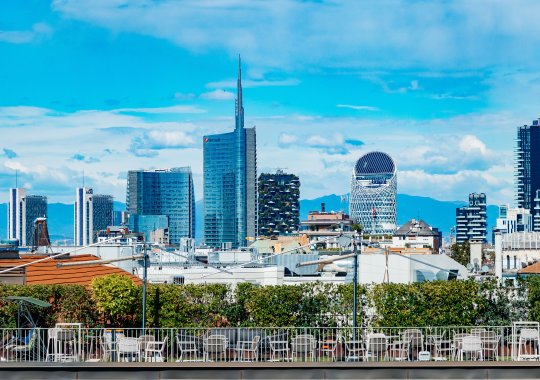
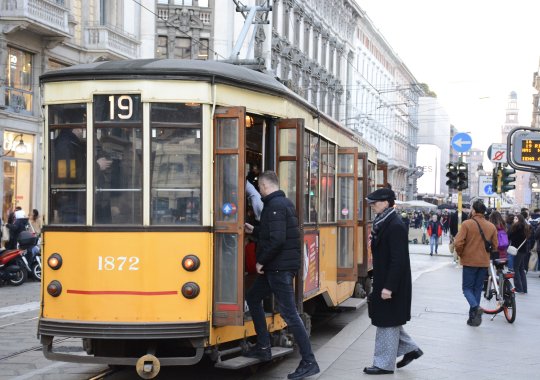
Within the Milan ranking, the renowned Navigli district ranked third from the bottom among 32 city areas in the IVH index, receiving only 1.8 points out of 10. The list of underperforming areas also encompassed Quadrono - Palestro - Guastalla (2.0), Solari - Washington (2.2), Arco della Pace - Sempione (3.4), Garibaldi - Porta Nuova (3.7), and the Historic Center (3.8). These top six spots linked with "Milanese luxury" currently exhibit much lower liquidity than commonly assumed.
Conversely, the leader in Milan was the student zone Città Studi - Susa (7.0 points) - an area oriented towards comfortable living, seldom associated with elitism.
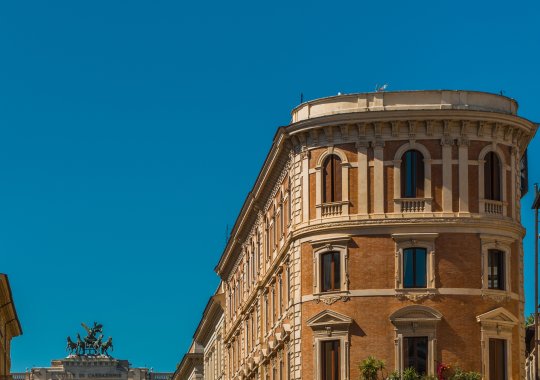
The historic center of Rome
In the capital, this contradiction is even more notable. In Rome's historic center, the rate of price reductions was 183% higher than in the Appio Latino - Colli Albani neighborhood, acknowledged as the city's most stable district. In the overall liquidity standings, Rome's city center ranks at the bottom with a score of 3.05 points. The top IVH rating was achieved in the Mezzocammino - Spinaceto - Tor de' Cenci area (7.5 points) - an outskirts location rarely showcased in glossy brochures.
Posillipo in Naples
A parallel scenario unfolds in the southern region. In Naples, the upmarket Posillipo district, a renowned hilltop area with captivating bay views that serves as the city's symbol for foreigners, compels sellers to adjust their prices 140% more frequently compared to the steadier working-class San Carlo all'Arena - Sanità area.
San Salvario in Turin
In Turin, the San Salvario neighborhood, formerly a vibrant nightlife hub post-Olympics (often dubbed the "northern Trastevere"), stood out for its average listing duration of 169 days. This figure represents one of the lengthiest and most problematic durations in the city. Four distinct urban areas and databases corroborate this same trend.
Infrastructure surpasses prestige
The underlying explanation across all four markets is straightforward: Real liquidity aligns with urban environment advancement, not historical eminence.
- In Milan, the introduction of the new M4 metro line reshapes demand dynamics: the Ponte Lambro - Santa Giulia area, now accessible via the M4 line, has emerged as the most vibrant in the nation - properties here typically sell in just 19 days.
- In Turin, the extensive revitalization of the Lingotto zone (OGR technohub, M1 metro station, post-Olympic housing stock) elevates the location's metrics to 100 days of exposure, a rare positive outlier in the typically sluggish Turin market.
- In Rome, well-connected high-quality outskirts consistently outperform the old core areas.
None of the cities studied featured a historically prestigious district as the leader in liquidity - in all cases, top positions were seized by areas undergoing recent urban upgrades.
Distinct profiles of the Italian market
Analysts delineate the markets of the four major cities as four entirely unique behavioral models:
- Milan - rational and liquid. Here, a record 84% of listings conclude without any price reduction. However, this precision is not due to owners but rather a mature ecosystem of seasoned real estate agencies and robust capital turnover. The average property exposure period is a record 27 days.
- Rome is divided. A significant gap of 91% exists between the "quickest" areas (80 days per transaction) and the "slowest" (152 days). The dynamics vary drastically from one quarter to another.
- Naples is emotive. The most notable contrasts are observed here: from a minimum of 65 days in the Materdei - Museo area to a peak of 138 days in the Colli Aminei - Capodimonte - Ponti Rossi zone.
- Turin is patient (or stagnant). The average selling period here extends to 131 days, with the Santa Rita - Mirafiori Nord area hitting the study's absolute record of 170 days online.
Penthouse: a challenging dream to sell
If exclusive locations face hurdles, then the most prestigious property type - penthouses (with open terraces and panoramic vistas) - exhibits even weaker performance. They epitomize costly marketing campaigns but, in reality, necessitate the most time and significant price concessions.
In Milan, the IVH index for penthouses stands at 4.08 compared to 4.57 for standard apartments (the discrepancy remains consistent, albeit minor). In Rome, this divide is maximal: 3.26 for penthouses versus 4.46 for regular housing - a difference exceeding one point.
The most striking figures come from Naples: only 51% of Neapolitan penthouses sell without price adjustments (in Milan, this figure is 81%). Worse still, 12% of prime properties in Naples require five or more successive price cuts before finding a buyer. In Milan, this occurs in just 1.9% of cases - a nearly sixfold difference.
Private seller vs. agency: reinforcing the stereotype (almost everywhere)
The enduring debate that private property owners, minus professional agents, often err in their initial property assessments is validated by data across most regions.
- In Milan, private sellers frequently resort to multiple price reductions (5 or more times) 58% more frequently than professional agencies.
- In Rome, this divide stands at 38% in favor of brokers.
- In Naples, the discrepancy between independent and professional sales is smaller but still evident.
The anomaly arose in Turin, where 78.2% of private owners never alter their listing price, whereas among agencies, this rate is 74.1%. Initially, this may seem indicative of accurate independent valuation. Nonetheless, the context alters the interpretation. Turin exhibits the slowest market turnover (131 days). Holding prices steady when buyer interest is initially low isn't financial acumen but a primary hindrance to sales.
This Turin anomaly constitutes the most pivotal finding of the report: identical pricing behavior under conditions of high liquidity (Milan) reflects precise assessment, whereas in stagnating scenarios (Turin), it signifies a systemic flaw. Only by juxtaposing prices with property exposure duration can the genuine market conditions be comprehended.
News