
























Ownership and maintenance responsibilities for the under-balcony concrete platform: who is accountable and in charge of its upkeep?
Ownership and Responsibility for Repairs of the Sub-Balcony Surface
Disagreements often arise among neighbors regarding the maintenance of balconies. Determining the party responsible for repairing the sub-balcony area involves assessing the balcony structure and existing legal provisions.
The sub-balcony surface, known as the "balcony ceiling" or cielino, constitutes the lower section of the reinforced concrete slab visible to the apartment owner below. This component not only serves an aesthetic purpose but also plays a crucial role in upholding the structure's integrity. It shields the reinforcement from moisture and external elements, enhances the facade's appearance, and provides a mounting base for accessories like awnings and sunshades. Moreover, its good condition helps prevent leaks and plaster deterioration.
Understanding the Balcony Ceiling
The sub-balcony area is the underside of the balcony slab, visible when standing on the floor below and looking up from the balcony. Essentially, it acts as a ceiling for the open space.
Despite being part of the upper balcony's design, it significantly influences the building's aesthetics and the lower-floor residents' comfort.
Key Design Aspects
To grasp the importance of the balcony ceiling, its primary functions should be considered:
- Position. It is situated opposite the balcony floor, with tiles and waterproofing above and a protective layer below, shielding the reinforced concrete slab from external conditions.
- Materials. Typically, the surface is coated with cement or lime plaster, then leveled and painted with specialized facade paints resistant to temperature and humidity fluctuations.
- Protective Role. The under-balcony finish prevents moisture from reaching the metal reinforcement. Cracks allow water ingress, leading to concrete deterioration and metal corrosion, resulting in plaster swelling and disintegration.
- Aesthetic Function. The under-balcony area's condition directly impacts the facade's appearance. Damp patches, cracks, and peeling finishes convey a sense of poor building maintenance.
Responsibility for Sub-Balcony Repairs
The party accountable for repairing the area beneath the balcony varies based on the balcony type. Legal precedents, such as Italian Court of Cassation rulings No. 14576/2004 and No. 7042/2020, establish distinct guidelines for protruding and integrated balconies.
Protruding Balconies
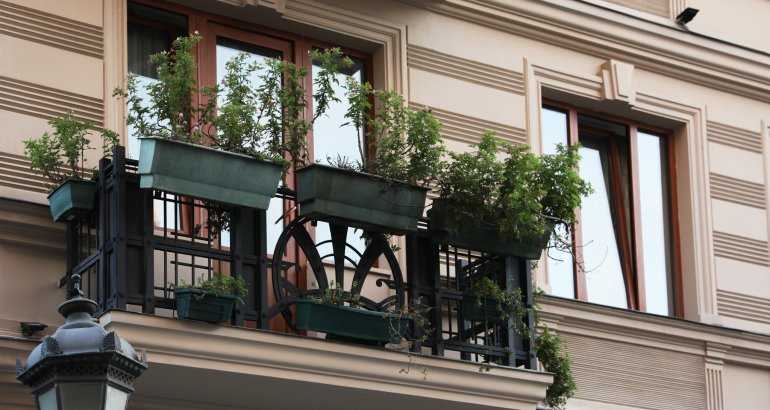
A balcony is categorized as protruding if it extends beyond the facade, overhanging three sides.
In this scenario:
- the upper apartment owner bears all costs for repairing the balcony ceiling;
- the balcony is part of their exclusive ownership;
- the lower apartment owner isn't obligated to share expenses since the structure doesn't support their residence.
Exception
If decorative elements like stucco or cornices are present in the sub-balcony area, constituting part of the facade's design, the restoration costs might be deemed common expenses.
Integrated Balconies
Integrated balconies lie within the building's confines without protruding beyond load-bearing walls.
For such structures, Article 1125 of the Italian Civil Code applies, distributing costs between upper and lower apartment owners.
The cost division entails:
- the upper apartment owner covers floor covering and waterproofing expenses;
- both owners share repair costs for the load-bearing slab;
- the lower apartment owner is responsible for plastering, leveling, and painting the ceiling surface, functioning as their space's ceiling.
Treatment of Decorative Elements
In many cases, the sub-balcony area features decorative embellishments like cornices or stucco.
If these elements significantly contribute to the building's exterior appeal, restoration expenses are distributed among all condo owners based on their respective shares.
This approach stems from considering the facade as collective property, with its aesthetic state concerning all residents.
Ownership of the Sub-Balcony Area
Ownership is contingent on the construction type.
For Protruding Balconies
The sub-balcony area belongs entirely to the upper apartment owner, who is accountable for its upkeep and safety. The lower apartment owner lacks ownership rights, despite daily proximity.
For Integrated Balconies
Ownership is dual. The structure is shared by adjacent neighbors, with the lower room owner essentially possessing rights over the lower surface, serving as their space's ceiling.
Surface Finishes
If facade cladding was designed for a unified appearance, the condominium might be responsible for maintenance, even if the structure remains private property.
Action Based on Balcony Type
When repairs are necessary, determining the structure type and organizing work correctly is crucial to sidestep conflicts and legal disputes.
Identifying the Balcony Type
Initial steps involve a visual examination.
- If the balcony extends beyond the facade without underlying walls, it's a protruding structure.
- A recessed balcony enclosed by walls within the building denotes an integrated balcony.
Procedures for Protruding Balconies
In such cases, the condominium manager typically can't mandate repairs unless safety is compromised.
If issues like peeling plaster arise, residents should contact the upper apartment owner. Often, balcony flooring cracks allow water seepage, necessitating addressing the moisture source for lasting sub-balcony repairs.
The upper balcony owner must promptly arrange restoration, bearing liability for any harm from falling structural components. Access to the lower balcony for scaffolding or equipment installation can be requested for repair purposes.
Procedures for Integrated Balconies
For integrated structures, resolving matters jointly with both owners is advisable.
Involving the condominium administrator to document agreements officially is recommended.
When contracting repair services, cost breakdowns should be clear:
- the lower apartment owner covers plastering and painting expenses;
- the upper apartment owner handles waterproofing and surface coating costs;
- Repairing the load-bearing slab entails shared costs based on legal provisions.
This method promotes dispute prevention and ensures equitable distribution of responsibilities between neighbors.
News