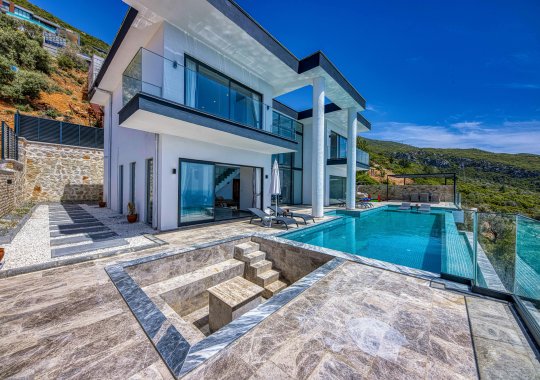

























Decorating the front of a structure in Italy
Decorating the front of a structure in Italy
Enhancing the front of a structure in Italy is typically considered as voluntary building work and doesn't involve intricate authorizations. Nevertheless, in specific instances, it's crucial to consider administrative and legal subtleties to sidestep penalties and issues with the local authorities.
The primary factors influencing the necessity of authorizations:
- altering the hue of the front;
- the existence of historical or architectural constraints;
- setting up scaffolding and utilizing public areas.
Which authorizations are necessary for front decoration
In most circumstances, the standard enhancement of the front is viewed as routine maintenance and falls under the "edilizia libera" system - free building work. This implies that submitting a CILA or SCIA is usually unnecessary.
Nevertheless, exceptions exist.
When authorizations are unnecessary
If the task is restricted to refreshing the front without altering:
- hue;
- type of surface finish;
- the external look of the structure,
then the action is viewed as regular maintenance, and notifying the authorities isn't obligatory.
This is the most common scenario - reviving the front without modifying the architectural aspect of the structure.
When CILA is mandated
A CILA document (work commencement notice) is mandated if:
- the hue of the front changes;
- different finishing materials are employed;
- the texture of the plaster changes;
- painting is part of a broader reconstruction;
- insulation of the front is executed ("cappotto termico");
- the dimensions of windows or doors are altered.
In such instances, the work is then categorized as unscheduled or major repairs.
Historical and landscape
If the structure is situated:
- in the historic center;
- in a zone of cultural heritage;
- in an area under landscape protection,
seeking approval from architectural oversight - Soprintendenza is essential.
In such regions, acceptable hues and materials are strictly governed to protect the historical ambiance of the zone.
Features in a shared building
Within apartment complexes, the front is considered the shared possession of the occupants. Consequently, any modifications to the exterior must be sanctioned by the condominium assembly.
Even while renovating private balconies, proprietors must adhere to the general color scheme of the structure to maintain architectural cohesion.
Authorization for public space utilization
If the task necessitates:
- scaffolding;
- elevators;
- platforms,
which occupy the sidewalk or road, procuring a permit for temporary public space usage is mandatory.
This requirement is applicable even if the construction work is linked to "edilizia libera».
Tax advantages in 2026
Despite the discontinuation of the "Bonus Facciate", landowners can still avail themselves of tax deductions under the "Bonus Ristrutturazioni" initiative.
At present, a 50% reimbursement of expenditures through tax incentives is granted for a decade.
Nevertheless, specific conditions must be met:
- For private residences, the work must be registered as unscheduled repairs (with CILA);
- For condominiums, standard front repairs may suffice.
Is decorating the front
According to Italian legislation, embellishing a façade is deemed as free building work if:
- the original hue is retained;
- the materials remain unchanged;
- there are no historical constraints;
- local "Piano del Colore" regulations are adhered to.
Numerous municipalities endorse specialized palettes of acceptable hues, especially for historic districts.
When enhancing the front is seen as a significant renovation
The project is classified as an unscheduled renovation if:
- the structure's appearance undergoes significant alterations;
- a novel finishing technique is utilized;
- insulation is implemented;
- balconies and fixtures are restored;
- the front is entirely revamped.
In such scenarios, the process becomes more intricate and necessitates official documentation.
Is CILA essential for a complete front renovation?
CILA isn't obligatory if:
- solely painting is conducted;
- minor cracks are rectified;
- the walls are cleansed.
It becomes mandatory if:
- the structure's hue is entirely altered;
- the type of cladding changes;
- the task pertains to thermal insulation;
- the front elements are altered.
Even with free work, the owner must adhere to safety standards and hygiene regulations.
Restrictions on landscape protection
Specific Norms:
- Preserving the former hues and materials may obviate the need for permission;
- Altering the hue necessitates a simplified landscape approval;
- The evaluation period typically spans around 60 days.
Unauthorized alterations to the front in such zones can result in:
- substantial fines;
- criminal culpability;
- the obligation to reinstate the original hue at the owner's expense.
Enhancing the front of a private dwelling (villetta)
For proprietors of individual homes, the process is usually more straightforward as consent from the condominium isn't mandated.
Nonetheless, municipal construction codes, complex requirements of the residential complex, and limitations on the area's color scheme must still be considered.
If scaffolding is solely erected on private premises, a permit for public space utilization isn't required.
However, if the renovation aims to enhance the building's energy efficiency, it is automatically viewed as an unscheduled renovation, necessitating a CILA for receiving tax advantages.
News